
Sectional Barges: A Complete Guide to Modular Barge Systems, Sizes, Uses & Buy vs. Rent
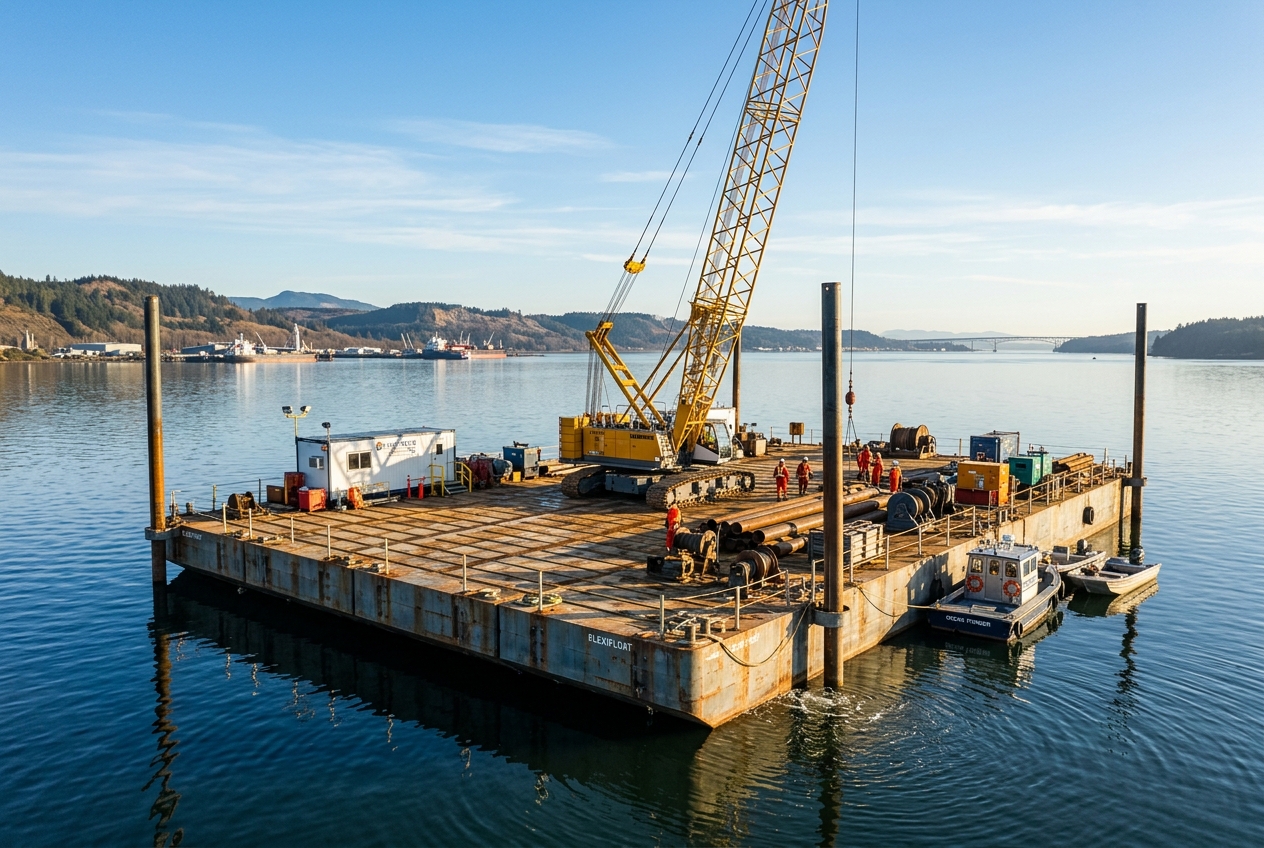
Sectional barges are modular, bolt-together steel platforms that combine multiple standardized barge sections into a single floating work deck. Because each section is built to a common connection standard, crews can assemble, resize, and reconfigure a sectional barge on-site to match almost any marine project — from bridge construction and dredging to pile driving and disaster response. This complete guide covers what sectional barges are, how modular barge systems connect, the deck sizes and configurations available, the most common uses, and how to decide whether to buy or rent.
What is a sectional barge?
A sectional barge is a floating platform built from individual steel modules — called sections — that lock together to form one continuous, rigid deck. Each section is a self-contained, watertight hull. Bolted or pinned to its neighbors, the sections behave as a single vessel while remaining small enough to truck to the job site over the road.
That modularity is the entire point. A traditional deck barge arrives at one fixed size; a modular sectional barge system lets you add or remove modules to build exactly the platform a project needs, then break it back down for transport and storage. This makes sectional barges the go-to choice for contractors working on remote inland waterways, shallow reservoirs, retention ponds, and locations a large pre-built barge could never reach by water.
The concept traces back to a simple logistics problem: getting a stable work deck to sites with no shipyard, no launch ramp, and shallow or landlocked water. Rather than build a vessel large enough for the job and then struggle to deliver it, sectional barge systems flip the equation — ship small, standardized pieces by road, then assemble the vessel where you need it. The result is a platform that is both easier to mobilize and far more versatile than a single-hull barge, since the same inventory of sections can be recombined for the next project.
How modular sectional barge systems work
Modular sectional barge systems are engineered around three ideas: standardized sections, secure connections, and adaptable deck hardware.
Standardized sections. Every module shares the same width, length, and connection pattern, so any section can attach to any other. Common section footprints are sized to sit legally on a flatbed trailer, which is why a full platform can be delivered by truck and craned into the water one piece at a time — no launch ramp or shipyard required.
Connections. Adjacent sections are joined with heavy-duty connection hardware — typically forged pins, through-bolts, or wedge couplers rated to transfer loads between modules. Connected correctly, the assembled deck flexes as one hull and can carry cranes, excavators, drill rigs, and material without the joints working loose.
Spuds and positioning. Vertical spud poles drop through spud wells near the corners of the platform to anchor it to the riverbed or seabed, holding the barge steady against current and wind while crews work. Raising the spuds frees the platform to be repositioned or towed.
Deck fittings. The top deck carries a grid of tie-downs, cleats, and mounting points so equipment, containers, railings, ramps, and spud winches can be secured wherever the job requires. This grid is what turns a bare hull into a true work platform.
Assembly itself is straightforward but methodical: sections are floated or craned into position, aligned, and locked together starting from one corner of the planned footprint. Ramps, push knees, and pipe-laydown sections can be added at the edges, and a spud barge or work boat handles final positioning. Because everything is standardized, an experienced crew can build a sizable platform in a fraction of the time it would take to mobilize a comparable single-hull vessel.
Deck sizes & configurations
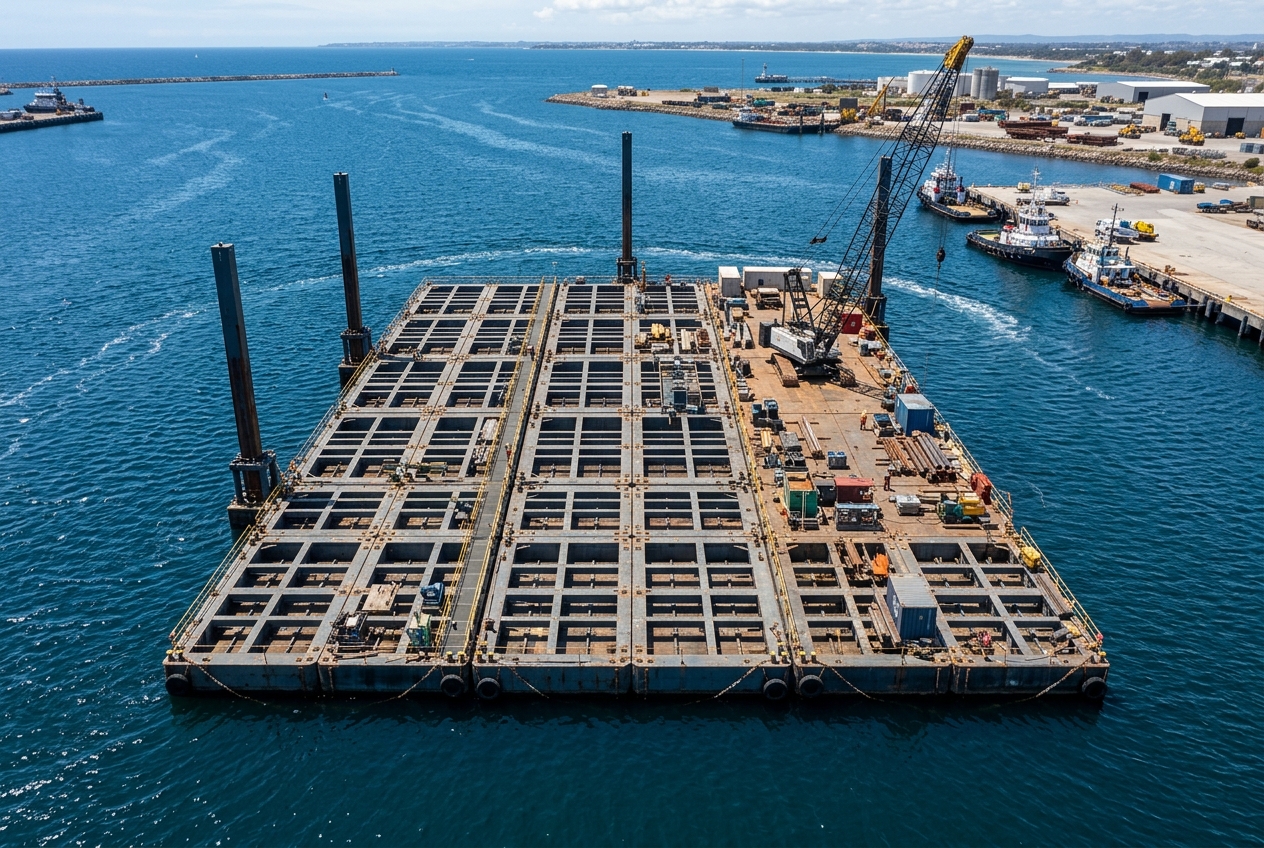
Because sections combine freely, sectional barge sizes are best understood as a range rather than a fixed catalog. A single section commonly measures on the order of 10 ft × 40 ft, and platforms are assembled up from there in whatever length-by-width grid the project calls for. The aerial view below shows how individual modules read as one continuous deck once connected.
Three factors drive the configuration you choose: deck area (how much equipment and crew you need to stage), deck load rating (the point load a crane or excavator will impose), and draft (how shallow the water is where you’ll work). Adding sections increases deck area and buoyancy, which in turn supports heavier loads while keeping draft manageable — a key advantage in shallow rivers where a deep-draft vessel simply can’t operate.
| Configuration | Approx. deck footprint | Typical application |
|---|---|---|
| Compact (2–3 sections) | ~20×40 to 30×40 ft | Inspections, small pump/generator sets, light survey work |
| Mid (6–8 sections) | ~40×60 to 40×80 ft | Pile driving, mid-size cranes, dredge support, utility crossings |
| Large (12+ sections) | 80×90 ft and up | Bridge construction, heavy lift cranes, multi-crew staging |
Figures are representative. Exact dimensions, deck load ratings, and draft depend on the section model and manufacturer.
Common uses for sectional barges
The same modular deck barge configuration serves a remarkable range of jobs. Because the platform can be resized and re-anchored, one fleet of sections can move from project to project throughout the year. The most common uses include:
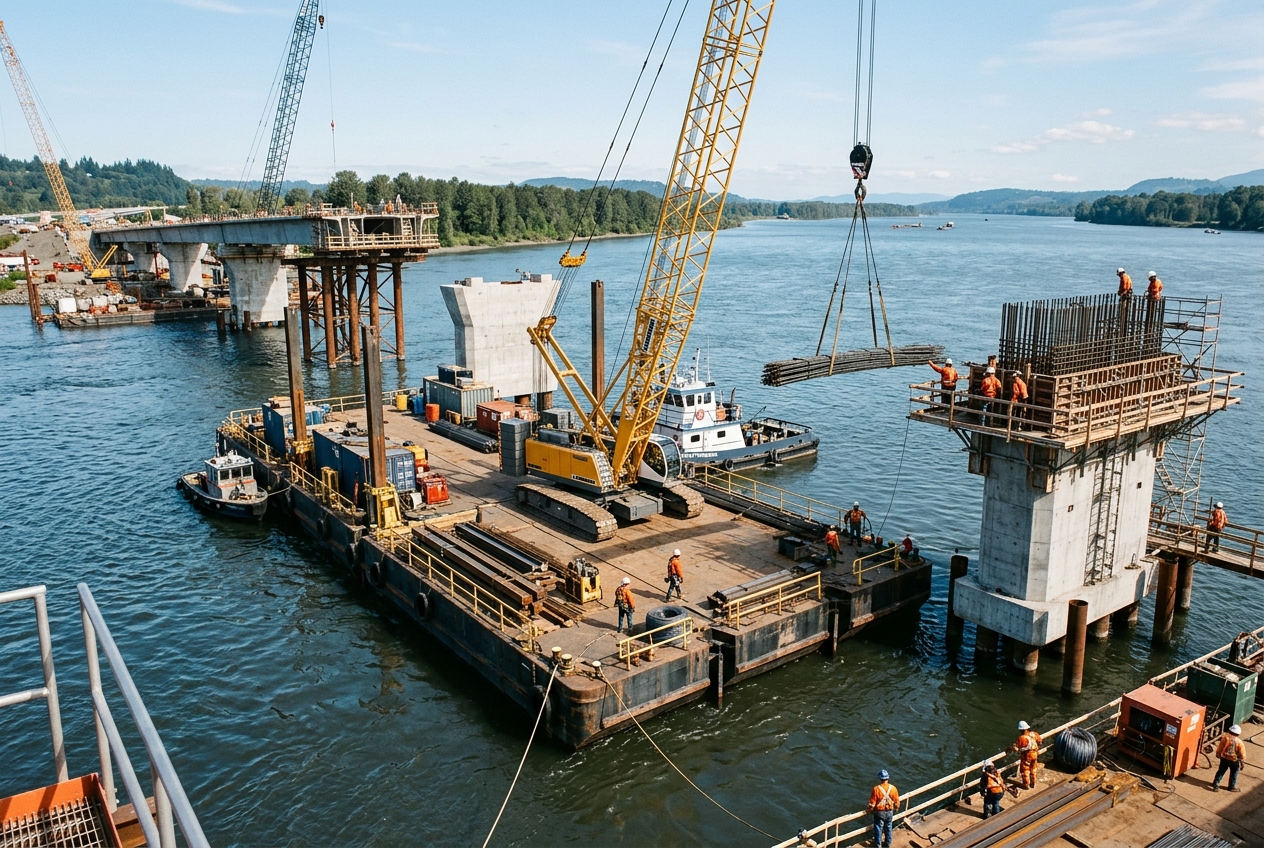
- Bridge construction. Sectional barges create a stable, spud-anchored work deck mid-channel for cranes, formwork, and pier construction — the backbone of a bridge construction barge spread.
- Dredging support. Platforms carry pumps, piping, and spoils-handling equipment, and provide a positioning base for cutter and excavator dredges.
- Pile driving. The rigid, anchored deck gives pile hammers and drill rigs the stability they need to drive foundations for docks, piers, and marinas.
- Disaster response & emergency access. Truckable sections can be assembled quickly to reach flooded or storm-damaged sites where no fixed dock survives.
- Marine construction & maintenance. Seawall repair, culvert work, utility crossings, and shoreline restoration all rely on a mobile, reconfigurable deck.
What ties these applications together is the need for a stable, relocatable work surface in places a permanent structure can’t reach. A contractor might stage a mid-size platform for a pile-driving job in spring, add sections for a summer bridge project, then strip it back down for a compact inspection deck in the fall — all from the same fleet of interchangeable modules.
Sectional barges: buy vs. rent
Should you buy a sectional barge or rent one? The right answer comes down to how often you’ll use it, how much you value configuration control, and your capital budget. As a rule of thumb: rent for one-off or seasonal jobs, and buy when barges are core to your recurring work.
| Factor | Rent | Buy |
|---|---|---|
| Best for | One-off or seasonal projects | Frequent, recurring marine work |
| Upfront cost | Low — operating expense | Higher — capital asset |
| Maintenance | Handled by the provider | Your responsibility |
| Availability | Subject to fleet scheduling | On-demand, whenever you need it |
| Configuration control | Limited to available stock | Full — spec your own sections |
Many contractors start by looking for a sectional barge for rent to prove out a project, then transition to ownership once utilization justifies the investment. A quality manufacturer can support both paths and help you right-size the fleet.
What to look for in a sectional barge manufacturer
Not all barges are built to the same standard. When you evaluate a supplier, look for:
- USCG Subchapter I compliance. Barges engineered and built to U.S. Coast Guard Subchapter I standards meet recognized structural and safety requirements for cargo and workboats.
- In-house engineering. A manufacturer with its own engineering team can certify connection load ratings, stability, and deck capacity for your specific configuration.
- USA-built steel construction. Domestically built hulls give you clear provenance, consistent quality control, and easier support and parts.
- Proven connection hardware. Ask for the rated capacity of the pins, bolts, or couplers and how the assembled platform performs under crane and impact loads.
- Support and lead time. Confirm delivery, spare sections, and service so a single damaged module never sidelines an entire spread.
Work Marine designs and builds modular sectional barge systems to these standards. If you’re weighing configurations, sizes, or a buy-vs-rent decision, our team can help you scope the right platform for your project.
Ready to build the right platform for your project?
Tell us your job requirements and our team will help you spec, size, and price a sectional barge system — to buy or to rent.
Request Your QuoteOr call (866) 883-4804
Frequently asked questions
What is a sectional barge?
A sectional barge is a floating work platform made of individual steel modules, or sections, that bolt or pin together to form one continuous, rigid deck. The modular design lets crews resize and reconfigure the barge on-site and transport the sections by truck.
How big can a sectional barge be?
Sectional barges scale from a compact 2–3 section platform (around 20×40 ft) to large 12+ section decks of 80×90 ft or more. Because sections combine freely, the deck can be built to almost any length-by-width footprint a project needs.
What are sectional barges used for?
Common uses include bridge construction, dredging support, pile driving, disaster and emergency response, and general marine construction and maintenance such as seawall repair and utility crossings.
Is it better to buy or rent a sectional barge?
Rent for one-off or seasonal projects to keep costs low and avoid maintenance; buy when barges are core to your recurring work and you want on-demand availability and full control over configuration.
How are sectional barge sections connected?
Sections are joined with heavy-duty connection hardware — typically forged pins, through-bolts, or wedge couplers rated to transfer loads between modules so the assembled platform behaves as a single hull.
What standards should a quality sectional barge meet?
Look for USCG Subchapter I-compliant construction, in-house engineering that certifies load ratings and stability, USA-built steel, and proven connection hardware with published capacities.
Published by Work Marine · 2026-08-23 · (866) 883-4804